
Hiring someone to come look at the space you've been avoiding is a strange thing to do. Maybe a little (a lot) uncomfortable. You're inviting a stranger (not creepy) into the closet, the basement, the guest room that's been collecting everything since spring. Most people I talk to aren't worried about the organizing part. They're worried about the first ten minutes. Usually they're bracing for one of two things: that I'll judge them, or that I'll walk in and be just as overwhelmed as they are. Neither is true.
So here's how it actually goes, from the first phone call to the last walkthrough. No surprises.
It starts with a call. It's free, about 20 minutes, and you don't need to prepare anything. You tell me about the space, how you use it, and what you'd like to be different. I ask a lot of questions, so grab a coffee or a crispy soda before I call.. By the end, you'll have a good sense of what working together would look like.
If it feels like a fit, I come out for a complimentary scoping visit, usually a week or two before the session, to walk through the space with you. We talk through your goals, I take measurements and start sketching out a plan. Afterward, I'll send you a proposal with the plan and pricing.
I'll also look at what you already have: bins, baskets, shelves in the garage you forgot about. I'd rather use what's already in your house before suggesting you buy anything new, and that includes anything you were already planning to order.
When something new does make sense, I'll source it and recommend exactly what to get. You'll see a product estimate up front with your proposal, so you know the cost before anything gets ordered. Once you approve it, I handle the ordering, and products either ship straight to you or come with me to your first session.
Then comes the session itself. How long it takes depends on the space. A pantry might be one session, and a basement might be a few. I work by the session rather than by the hour, and on bigger projects I break the work into chunks so each day ends at a natural stopping point. Still a work in progress, but manageable. You won't be left with everything on the floor at the end of day one.
When I arrive, we start with a quick walkthrough together. We look at the plan, and you tell me if anything has changed since the scoping visit. Sometimes it has. A kid moved home, the holidays got closer, you realized the coffee mugs really should live by the coffee maker. The plan bends.
Next, everything comes out of the space and gets sorted into categories. All the cords together. All the cleaning supplies together. All the gift wrap together, which is usually more than anyone expected. You're welcome to be part of this, but you don't need to be.
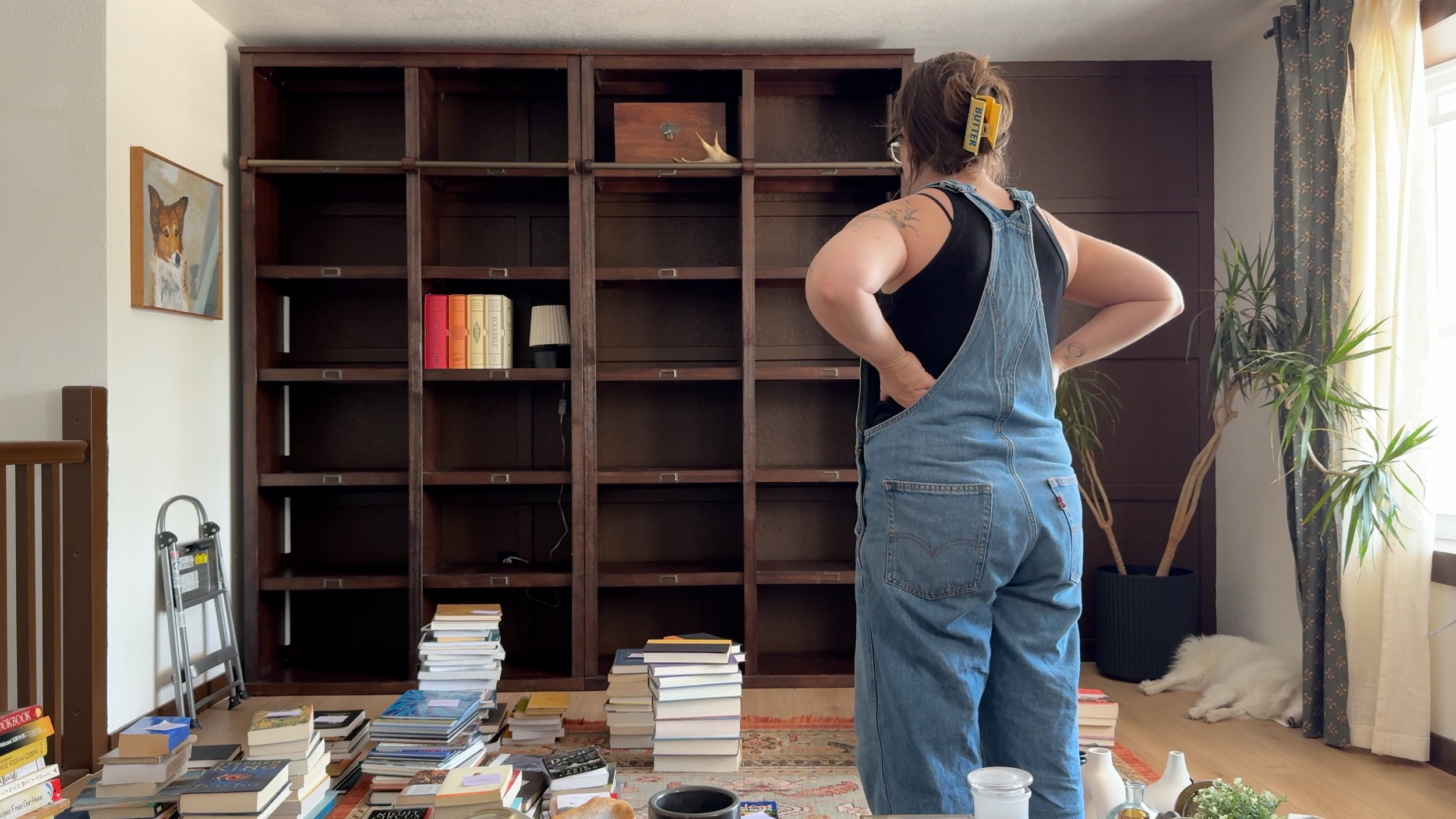
Me: oh no. Sigrid: unbothered.
This is usually where a DIY closet clean-out falls apart. You pull everything out, then try to sort it, decide on it, and put it away all at once, and halfway through you're standing in a huge mess with no motivation left.
It happens on my projects too. There’s always a point where everything is out, every surface is covered, and it looks worse than when I started. I tell clients the same thing every time: this is the crazy part. It gets worse before it gets better. I’ve got you.
When I handle the sorting, you get to skip that part. As I go, I'm already noting what might live where and what could be let go. By the time you come back in, everything is in categories that make sense, and you've saved your energy for the part that actually needs you.
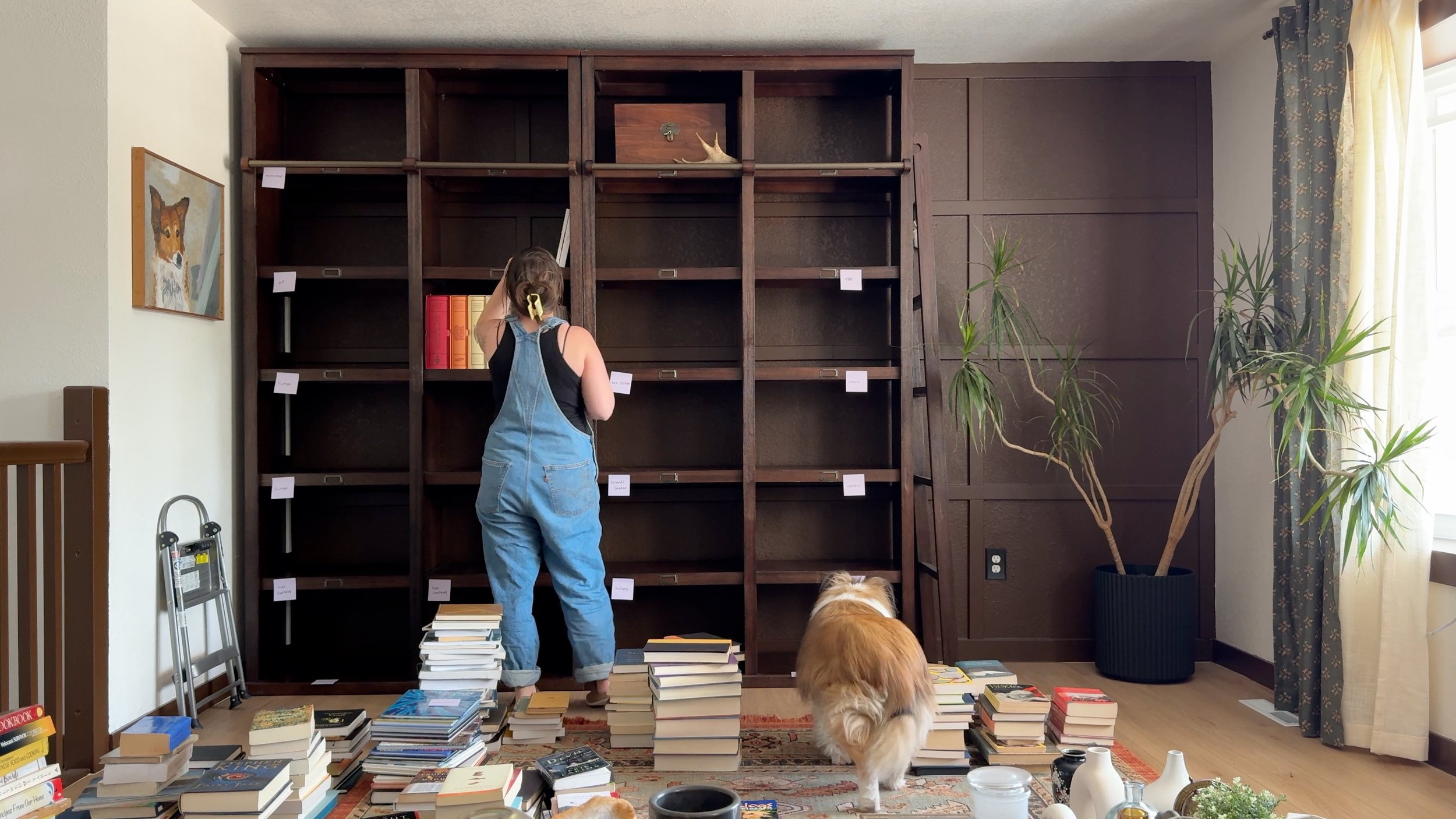
Categories first, books second. Supervision provided. Help not included.
Then we decide what stays, and this part is all you. I'll ask questions and help you think it through, but nothing leaves your house without your say. Seeing everything sorted by category does a lot of the work for you. Once the rusty can opener and the one that only latches on sometimes are sitting next to the workhorse you're always digging for, letting go of the other two gets a lot easier.
And for every full day of service, I'll take a carload of donations with me when I leave, so they don't end up sitting by your front door for a month.
Once the decisions are made, I put everything back. This is where the plan turns into something real. Things you use every day go where you reach for them. Things you use twice a year go somewhere sensible, but out of the way. Bins get labels, so you're not the only one in the house who knows where the batteries are.
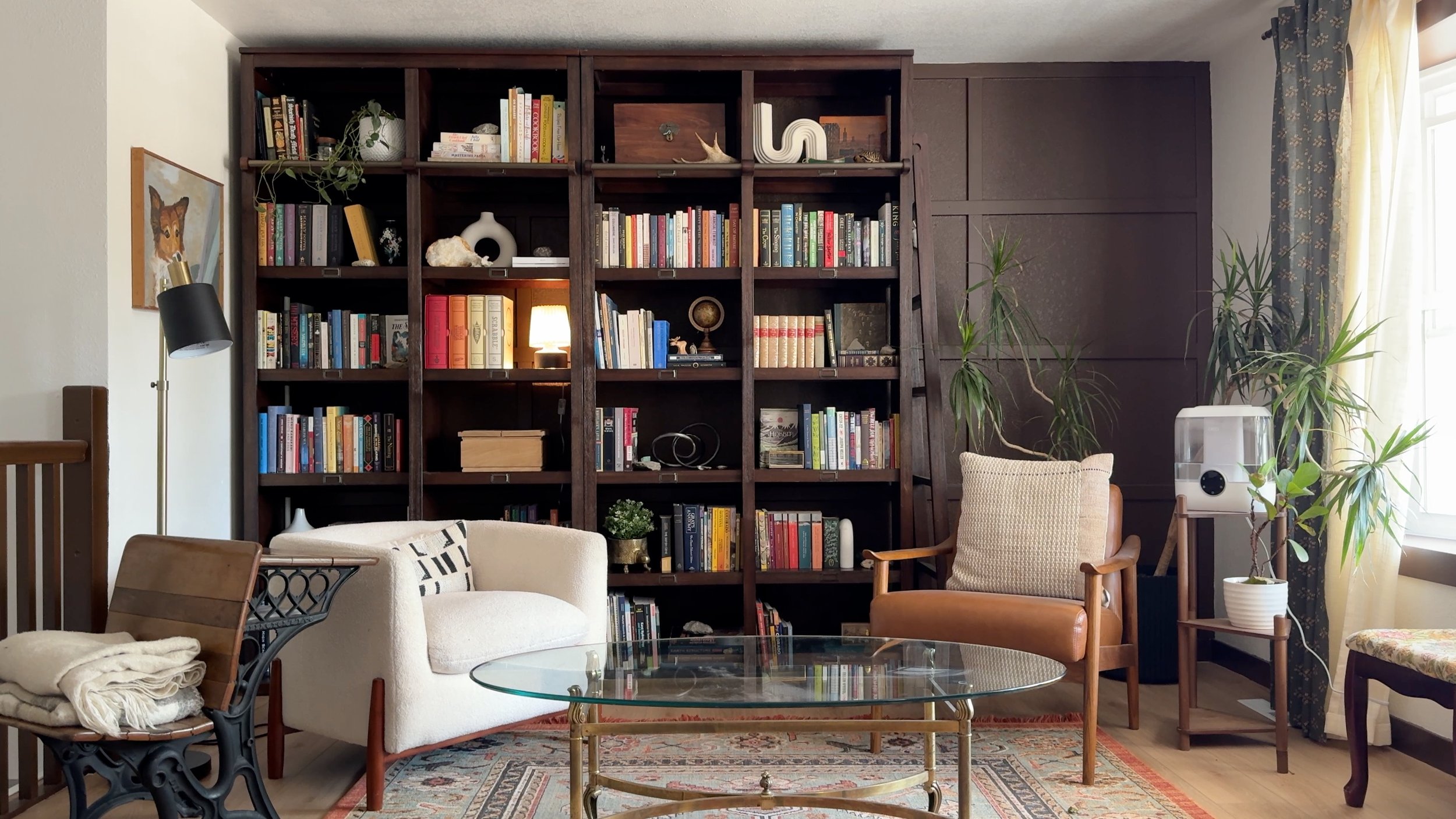
From oh no to oh yeah. The dogs walked out in protest once the furniture started moving.
At the end, we do one last walkthrough together. I show you where everything landed and why, and we make sure the system works for how you actually live. If something feels off, we change it then and there.
If there's a space you've been meaning to get to, the first step is a free 20-minute call. Book a time here →